A Two-Year Community Project Unveils 'Signs for Birds' Along Coppermill Lane
New public art installations have appeared at Walthamstow Wetlands and along Coppermill Lane, the result of a two-year collaboration between local residents, design collectives, and international partners. The signs, which organisers describe as being "for birds to read", use visual language inspired by avian colour perception and celebrate the wetlands' role in global migratory routes.
Community Co-Creation
The project was developed through workshops, meetings, and collaborative design sessions involving Coppermill Lane Residents Group, Coppermill Primary School, The Mill community centre, and St James Big Local. Design organisations Europa and what if: projects led the creative direction.
Europa, co-founded by Robert Sollis, and what if: projects, directed by Gareth Morris, previously collaborated on Flowers for Sutherland Road, a public art installation on street shutters completed in 2024.
Design and Concept
The signs feature humorous interpretations written from a bird's perspective, including mock menus, calls, and bird-oriented messages. South-facing signage identifies the wetlands as a Ramsar-recognised site, meaning they hold international significance under the Ramsar Convention on wetlands.
The installations reference the East Atlantic Flyway, the migratory route connecting Walthamstow Wetlands to wetlands across Europe and Africa. Featured species include the Common Ringed Plover, Osprey, Black-tailed Godwit, Common Tern, and Red Knot.
Chukwuike Ebuzome from Finima Nature Park in Nigeria contributed as a guest collaborator, drawing connections between the Lee Valley and wetland conservation efforts in West Africa.
What Organisers Said
Gareth Morris, Director of what if: projects, said the project "is inspired by the unique landscapes near Coppermill Lane and celebrates collaboration with local people of all backgrounds and ages."
Robert Sollis, Co-founder of Europa, added: "Just as migratory birds enrich the Lee Valley by travelling vast distances to make it their home, this project reminds us that migration – whether of birds or people – brings life, connection, and wonder to the places it touches."
About Walthamstow Wetlands
Walthamstow Wetlands is a 211-hectare nature reserve and Europe's largest urban wetland. Opened to the public in October 2017 following a £10.6 million renovation, the site comprises ten reservoirs owned and managed by Thames Water. It supplies drinking water to 3.5 million people.
The wetlands hold Site of Special Scientific Interest (SSSI) status and are recognised internationally under the Ramsar Convention. The Engine House visitor centre opened in 2017 following renovation works.
Visitor Information
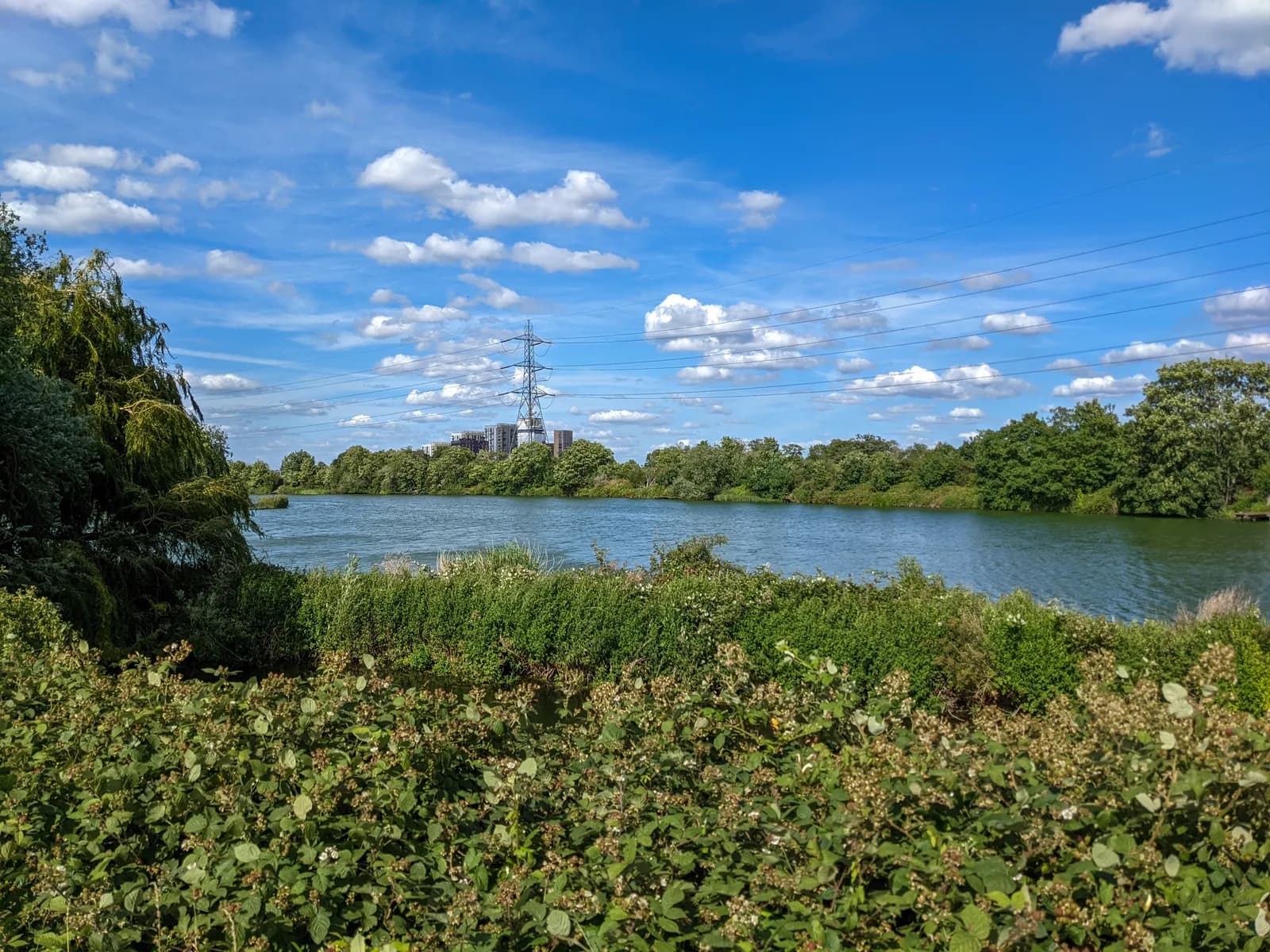
Parts of the wetlands remain affected by electricity pylon improvement works. Paths 1-2-3 and 4-5 are currently closed as part of a national project to upgrade the UK's electricity network. The works, which involve upgrading three iconic pylons on the site to accommodate clean energy from offshore wind farms, are expected to complete by the end of August 2026.
Last entry times vary by season: 3.45pm on weekdays and 3.30pm on weekends from October to March; 4.45pm on weekdays and 4.30pm on weekends from April to September.
Wider Context
The signs project forms part of ongoing cultural regeneration in Walthamstow, which includes the recently opened Soho Theatre Walthamstow in the restored Grade II* listed Granada Cinema, and Fellowship Square, a mixed-use development providing 433 homes. The borough's diversity is reflected in the project's metaphor connecting bird migration to human migration, set against Waltham Forest's status as one of the most diverse areas in England.
The signs were officially launched at a celebration event on 13 May 2026.